Tuesday, August 27, 2024

So, you're wondering what is an appropriate use of AI in academia, eh?

NOTE: This is part of a series of posts that I've written for students. Here are some others:


Here’s my personal policy on using Artificial Intelligence in academia: Asking an AI Chat Bot to write your assignments is a form of academic dishonesty (just as it is unacceptable to search online for existing text and submitting that work as your own). There are, however, ways to use AI appropriately as a support for research and writing. We will have a discussion in class about this to make sure we are all on the same page about what constitutes a legitimate use of AI in your assignments. 

As an example of appropriate uses of AI from my own experience: I sometimes ask my AI to help suggest clearer phrasing when I’m struggling with a long and difficult sentence – but honestly I increasingly find myself avoiding doing so, because research shows this weakens our cognitive capacities. Sometimes I’ll upload text I’ve written and asked it to critique the argument and outline areas of weakness. I also have used AI to help manage a data file in Excel (creating new tabs, formulas, and charts to cut down on the amount of manual labor required to do this myself), used Claude Code to make a video game with my kids, and asked it to simplify readings or search for evidence (for instance, “what did X person have to say about Y? Can you provide a link to the source?”). I consider all of these potentially appropriate uses of AI. However, in each instance I want to emphasize three things: 

First, AI isn’t necessarily better. It is important to me personally that I don’t come to see AI as superior to human work – after all, it is fundamentally based on human language, and built by humans. Also, I do not want to rely on AI as a crutch, which could dull my critical thinking capacities. I want to use it as a tool to support further critical thinking skills. So, I recommend always asking oneself “do I really need to ask this of the AI, or can I do it better if I just put in the effort?” Many times I have found using AI has actually taken up more time than if I had just worked out a problem myself. And the quality of the work is almost always better (at least in my mind) when I’ve done it myself.

Second, it is essential to understand that AI frequently hallucinates – even the newest models. It is based on existing language out there in the world, but it can be duped, frequently misunderstands social cues or human context, and tends to make up answers rather than admit that it does not know. As an example, I once asked an AI Chat Bot to create a list of the 10 most influential books on a given topic. It came back with a list, but some of the entries were of questionable fit (not quite related to the topic I had asked), and a few of the entries were completely fabricated. They were real-sounding books by real-sounding experts, but they totally did NOT exist in the real world! All this to say, it is absolutely crucial to fact check and verify any substantive work that you ask AI to do, especially if this involves internet research. As scholars we have a duty to verify work produced by AI – especially if our work ends up online – to make sure that future research is not building upon faulty and fabricated data. 

Finally, I would like students to add an AI usage disclosure statement to any assignments for which AI was used. This should appear at the end of your assignment as a statement indicating how you used AI in your research and writing process (even if you did not use it at all). An example will be provided in class. If you should find yourself asking your AI Chat Bot to write out an AI usage disclosure statement for you, I recommend that you stop, step away from your computer, and go for a walk in nature, and contemplate what the world might be like if humans no longer feel confident writing anything without first asking an AI to do the work for them.

AI Usage Disclosure Statement: I wrote this policy entirely without using AI. Afterwards, I uploaded the policy to my AI Chat Bot and asked it to provide suggestions for improvement. While it did come back with a list of ideas, I decided none of the suggested additions it offered were really necessary, so the original human-generated text which I wrote has remained unaltered. I also used Gemini to help reformat the text which I had written in a Word Doc for the purposes of reposting it on this blog site.


Thursday, January 11, 2024

The Hills Are A-Changin’: Tracking our Hotter and Wetter Weather

Here's a two-part series that I wrote for the Low Down newspaper - my local community paper in the Gatineau Hills. Republished here with supporting visuals:


The Hills Are A-Changin’: Tracking our Hotter and Wetter Weather (Part 1)

By Ryan Katz-Rosene, October 23rd, 2023

September 2023 was a stunner for climate change scientists. The average global temperature that month was 1.8°C warmer than the typical September of the pre-industrial era, completely shattering the record which had only been set earlier this summer, in July. 1.8°C may not sound like a lot, but consider that the Earth’s average temperature during the last ice age – when most of North America was covered in a sheet of ice – was only about 5°C cooler than the pre-industrial era.

Unsurprisingly, September was warm here in the Hills too, with the average monthly temperature clocking in at 2.59°C warmer than the typical September from the mid-Twentieth Century (using a 1951-1980 baseline). But it wasn’t our warmest September ever. Remarkably, September 1961 holds the record for that month here in La Pêche (at least going back to 1940, at 3.68°C warmer than the 1951-1980 baseline). 

You’ll note two important things from the above: First, localized temperature patterns are far more variable than global temperature trends. As Dr. Saravanan, Professor of Atmospheric Sciences at Texas A&M University, told me, one does need to be “very cautious in interpreting local trends, which include both human-induced warming and natural variability,” with the latter being “much stronger locally”. Second, warming here has actually been much greater on average than the global mean warming. Globally, the world has warmed on average about 1.3°C (even though this year specifically will likely surpass 1.5°C) since the pre-industrial era, but much of Canada has already warmed by 2-3°C on average (this is because land and extreme latitudes have warmed at a greater pace than the vast oceans covering Earth).

If we chart the annual average temperature change observed here in the Gatineau Hills (specifically here in La Pêche), we can see a clear trend of warming since the 1940s. The early 1950s were surprisingly warm here, and the region saw cooler temperatures through much of the 1960s and 1970s. We then saw some rather large temperature swings, with hot years bringing up the running 10-year average up by about +0.8°C relative to the 1951-1980 baseline. While in global terms 2023 is on track to be the warmest year on record, the jury is still out on whether that will also be the case locally – but the current record warm 1998 (a super El Niño year which was 2.25°C warmer than baseline locally) will be hard to beat.

The temperature changes are more pronounced when you break them up by season. Here in the hills our winters have seen greater warming than other seasons. The typical winter of the last decade was about 1.4°C warmer than the typical winter of the 1951-1980 baseline. A few anomalously warm summers in the 1940s and 50s, and warm autumns in the 1940s drove up the decadal averages earlier in this series for those seasons, but make no mistake – the clear trend is one of warming since 1940 (even though the linear trend for fall is mostly flat over the last 80 years).

What kind of warming is coming down the pike? That’s for another piece. But it is interesting to note that the world is currently transitioning from a ‘triple dip la Niña’ to at least a moderate-strength el Niño, and the last few times that’s happened have tended to be record warm in global terms. What happens here in the Hills may differ: The Weather Network is reporting that this could become a “Modoki El Niño” which starts off warm across the country but then could see bursts of intense cold here in the Eastern half of the country over the winter. Only time will tell!


Tracking our Hotter and Wetter Weather (Part 2)

By Ryan Katz-Rosene, November 24, 2023

One of the most reassuring – yet simultaneously daunting – things about climate change is this: Global warming will stop when human activities stop emitting Carbon Dioxide (CO2). There are of course a few caveats, the most important of which is that anthropogenic emissions of other greenhouse gases (like Methane and Nitrous Oxide) will also need to be reduced significantly (though not to zero, as CO2 needs to). It won’t stop overnight, but as world-renowned climate scientist Zeke Hausfather from UC Berkeley has written “warming is likely to more or less stop once CO2 emissions reach zero”.
This factoid is partly reassuring because it tells us that we humans are largely the authors of our own fate when it comes to climate change. The best available science tells us there is no significant additional warming “baked in” once we reach that zero emissions target. The daunting part is that the objective of zero CO2 emissions still seems very far away. It is not even clear that global CO2 emissions have peaked yet. What’s more, any additional CO2 we emit between now and reaching ‘Net Zero’ will only continue to drive up Earth’s average temperature. 

Our future climate here in the Hills, in turn, is closely tied to how successful the world at large is in reducing GHG emissions. To help model the potential futures that await us, the Intergovernmental Panel on Climate Change has created five core ‘scenarios’ for future global warming – called ‘Shared Socioeconomic Pathways’ (SSPs1 through SSP5). These scenarios – based on a range of different assumptions about social, political, and economic progress are then cross-referenced with a range of different End-of-Century scenarios for how much additional energy there could be in the Earth System. These latter energy balance scenarios are called ‘Representative Concentration Pathways’ (RCPs). 
Generally-speaking, the lower the SSP and RCP numbers, the more favourable our future is. For instance, “SSP1-1.9” (i.e. a socio-economic scenario 1, featuring high levels of cooperation and socio-economic development, combined with a lower future energy balance of 1.9 Watts per square meter) is one of the ‘best-case scenarios’, wherein we would limit global warming to about +1.4°C by 2100 (relative to an 1850-1900 baseline). In contrast, the dreaded ‘SSP5-8.5’ is a ‘worst-case scenario’, in which the world warms by +4.4°C by end of the Century on average. Unfortunately, the ‘best-case scenario’ is almost impossible to achieve now – in fact, many climate scientists now say it’s too late to limit global warming to +1.5°C. And luckily, the worst-case scenario is also considered to be rather unlikely by climate scientists. At present, the world is on track for about +2.8°C of warming by end of Century when policies in place are modelled. If we factor in additional pledges, it gets down to +2°C of warming. We can technically limit global warming to +2°C or even below, but major political breakthroughs would be required, and we are in a race against time.

As Part 1 of this series hinted, warming here in the hills is largely determined by the extent of warming globally. The average annual temperature here (in the Wakefield area) over the last 30 years is about 6.1°C. This already represents a warmer climate than mid-Century (1940-1970), when the average annual temperature here was 5.5°C (i.e. we’ve seen +0.6°C over the last 7 decades). If we model different climate scenarios into the future, we can see just how much our climate is expected to warm further. Under a more favourable global scenario – say, SSP1-2.6 – then here in the Hills we can expect the average annual temperature to be around 7.7°C by late Century (2070-2100). However, in a worst-case scenario (SSP5-8.5) it would be 10.9°C. Yikes indeed! If I were a betting man, I’d say we will likely end up somewhere between the two, perhaps tracking closer to SSP2-4.5, in which case the average annual temperature here by end of Century would be 8.9°C. But boy oh boy do I hope I’m wrong! That would mean our regional climate is +3.4°C warmer on average than our mid-20th Century climate. As I’ll explain in my next post, the impacts associated with that level of warming could significantly change life as we know it here in the hills.


Wednesday, October 11, 2023

Introducing "The TradeOff"

It's official, I've moved my blogging to Substack! Here's a link to my latest posts: https://thetradeoff.substack.com/ 


What you'll find on "The Trade Off" by Ryan Katz-Rosene
Oh great, yet another Substack...

“I’m launching a Substack” has got to be one of the most worn out and obnoxious phrases of the last two years… but I’m joining the club! Here’s why, and what you’ll find here on my Substack Newsletter, which I’m calling “The Trade Off”.

Why I’m launching The Trade Off: One, the social media sphere has changed dramatically over the last couple years. Whereas I once enjoyed crafting Twitter threads - in part to help me relay things I’ve been learning about, and in part to help structure my own thoughts about various topics of interest - that space is fundamentally gone now. Elon Musk’s takeover transformed the space, and caused a great exodus and scattering of people whose opinions I looked forward to reading (to Mastodon, Threads, and now BlueSky, where I have hardly any presence). Meanwhile, I rarely get the engagement on Twitter that I used to after spending time putting together a thread. And moreover, the extra time spent trying to parse everything into sub-thoughts of 280 characters is annoying as heck. So I’m going for the long form! I still plan to post my thoughts on social media, but when I have something longer to say I’m hoping - over the next little while at least, for a trial period - to say it here and then link to it on social media (even if it has to be linked subversively because certain billionaire social media platform owners are so damned sensitive).

What You’ll Find Here on The Trade Off: This substack is going to be about the contentious world of climate politics, and the complexities underlying our ecological predicament and what to do about it. It is about my field of study - ‘Ecological Political Economy’. So many environmental “problems” and “solutions” involve trade offs which are worth further exploring if we want to make informed and robust policy decisions. It can be difficult to parse through the noise, to weigh pros and cons, benefits and costs.

A few examples of trade offs from areas of my research: A nuclear energy scale up could offer really substantial climate benefits because it’s low carbon and (relatively speaking) safe… But it’s also extremely costly, takes long time to build (time we just don’t have in terms of climate change), and faces huge social opposition. What do to about nuclear? Another example: High-speed trains could - if electrified through green energy - provide a greener travel alternative to airplanes in some key corridors, but in a Canadian context there are a lot of conditions which must be met for this to work favourably for the climate. Meat… one of the most environmentally impactful categories of food to produce when compared on a kilogram by kilogram basis… but at the same time it packs a lot of nutrients, a complete array of amino acids, and some form of animal husbandry can support various socio-ecological objectives (like supporting field-bird habitat or food security by enabling food to be produced on marginal lands). What do do about meat and the environment? The examples go on and on; rarely is environmental sustainability a straightforward matter. There is no universal objective “sustainability”, but rather it’s something that we have to hash out and determine through deliberation of benefits and trade-offs. That’s really what this Newsletter is about fundamentally - informing those debates.

I will not be posting often - only when I have the gumption, motivation and time to write something out (maybe once a month at most)… so not to worry about having your inbox filled with Ryan’s screeds! Hope you enjoy!

Friday, September 3, 2021

“C” is for climate platform: Grading the major national parties’ climate plans

NOTE: A revised version of this post will be published on the Center for International Policy Studies blog next week (August 8, 2021).

The summer of 2021 may mark a potential turning point in Canada’s collective climate consciousness: In June, an unprecedented “heat dome” in Western Canada saw temperatures soar to record heights. The whole world watched as the town of Lytton, BC, hit 49.6°C, completely shattering the country’s previous heat records. Then came the wildfires – hundreds of them – followed by relentless crop-killing drought throughout much of the prairies, and hazy smoke-filled skies across the rest of the country for weeks. The highly anticipated release of the IPCC’s Sixth Climate Assessment in August seemed to solidify for many Canadians just how destabilizing climate change will be in their own lifetimes.

It is perhaps unsurprising that climate change now ranks as the number one concern of Canadian voters. Now that the Trudeau Liberals have called a snap election, let us take a moment to evaluate the four major parties’ climate platforms. With the exception of the Green Party, which hasn’t yet released a full platform, the Liberals, Conservatives and NDP each have dedicated climate plan documents, available here, here, and here, respectively. For its part, Green Party leader Annamie Paul has suggested that the party’s stance on climate change is “virtually identical” to what it was during the 2019 election campaign (so I base my analysis on that document, which can be found here). For this analysis I developed a fairly rudimentary ‘rubric’ to grade each climate plan along four axes: ambition, feasibility, effectiveness, and accessibility. Here’s a breakdown for each category, with the final ‘grades’ posted below:

Ambition 

Here I sought to determine how ambitious each plan was relative to Canada’s current climate policy framework. Ramping up ambition is important domestically, as it signals to voters how urgent of an issue the government considers climate change to be, and hints at the scale of change required to address the problem. Canada’s current climate policy framework, as shaped by the Trudeau liberals over the last half decade, is more ambitious than the prior Harper government’s climate policy, thanks to a wide range of programs and policies that have been introduced (in particular, the Pan Canadian Framework on Clean Growth and Climate Change, which includes carbon pricing as a core element of the plan; and the Net Zero Accountability Act, which requires the government to set legally-binding five-year GHG reduction targets through to reaching Net Zero in 2050). 

I graded each party on a scale of 1 to 10, where 1 marks a major scaling back of ambition; 5 marks the same level of ambition as the government’s current policy; and 10 marks a major ramping up of ambition. The Liberals scored a 7/10, in part because they have expressed a clear desire to take their climate mitigation strategy to the next level, including ramping up Canada’s GHG reduction target, earlier this year, to 40-45% below 2005 levels by 2030. The Conservatives have stated a desire to scale back to the Harper era target (30% below 2005 levels by 2030). That’s a major problem, as it would mark a violation of the Paris Agreement rules. For this reason, they scored a low 4/10. If the Liberals mark a scaling-up of ambition, then the NDP’s plan does so even further, with a stated reduction of 50% below 2005 levels by 2030 (earning them a score of 8/10). The Greens, who in 2019 called for a 60% reduction below 2005 levels by 2030 as well as a complete re-orientation of the economy around climate change mitigation, earned an impressive 9/10 for ambition. 


Feasibility

Of course, it’s one thing to have ambition, quite another thing to have a viable plan to get us there. Unsurprisingly, those parties with the most ambition generally have plans that seem harder to swallow given Canada’s contemporary political reality. Here I asked, on a scale of 1 to 10, how feasible each plan was in terms of being “palatable” and “adoptable” given Canada’s contemporary social, political and economic contexts, with 1 representing a plan that will face major obstacles; 5 representing a ‘typical’ level of political support and opposition seen in Canadian policy implementation; and 10 marking a plan that will easily garner enough support to come to fruition.

For context, it’s important to remember how wedded parts of the country are, politically and economically, to oil and gas production. Let us also not forget the torrent of opposition that often comes alongside new oil and gas infrastructure (in particular, pipeline projects). Canada, in short, is a divided nation on the question of whether fossil fuels have any role to play in the future. The country also has a complex federal structure where various areas of overlapping jurisdiction between provinces and the national government compete, making climate policy a slow and hiccup-ridden process. On one hand, the Liberals have a high level of political support for their climate objectives, even from voters in other parties, leading to a fairly high score on feasibility. However, because of the tensions simmering beneath the surface of its carbon pricing plan, the Liberals’ platform scored a 7/10. There are plenty of actors, in short, that will seek – and have the means – to throw wrenches in Trudeau’s plans. The Conservative plan scored a titch higher (at 8/10). The reality is that because most Canadians want to see climate action, it is unlikely that there would be much opposition to any climate-based policies that the Conservatives seek to put in place, with perhaps the exception of the increasingly vocal youth climate movement, which is unlikely to take kindly to a roll-back in ambition. The NDP plan would likely garner support from many corners of the Canadian populace, but its proposed deep emissions cuts are likely to push up against social and cultural norms in various parts of the country (they got 6/10); the Greens would push even more buttons (the policy changes required for a 60% reduction of 2005 emissions over the next 9 years would be very difficult to bring about politically, so their score was 4/10). 


Effectiveness

In terms of effectiveness, I sought to measure how successful the plan would be in meeting global climate change mitigation goals if the plan were fully instituted. I asked, on a scale of 1 to 10, how effective each plan would be in terms of putting Canada on a path towards supporting the Paris temperature targets of limiting global warming to between 1.5° and 2.0° C (with 1 representing a plan that does not come close to supporting Canada’s required contributions; 5 marking a plan that approaches the 2.0° C threshold; and 10 denoting a plan that would firmly put Canada in the group of countries helping the world get to within the 1.5° to 2.0° C temperature target). 

Canada’s current planned policies put the country on track for what Climate Tracker calls an “insufficient” contribution to climate mitigation, meaning that if all other countries had the same level of ambition as Canada, the world would likely see up to 3°C of warming by 2100. Given the Liberal plan to improve emissions reduction targets and its overall comprehensiveness, I’m tempted to offer a score of 6/10. However, the plan’s relatively high reliance on carbon sequestration technology, its unwillingness to embrace the idea of full decarbonization (using instead the oil and gas sector’s subversive language on “Net Zero”), and its central focus on the ever-elusive idea of “green growth”, bring the score down to a 4/10. The truth is it’s going to be incredibly difficult to make Canada’s economy compliant with Paris’ global temperature goals without drastic changes to our economic and regulatory structure, because we’re starting from such a high baseline and have so little time to get to zero. For all their good intentions, the Liberal climate policy is too conservative in its attempts to achieve emissions reductions without changing the nation’s political economy too significantly. The Conservative plan is even worse as far as effectiveness goes. Yes, it offers up a range of tools mirroring some of the Liberal policies, including carbon pricing for individuals and corporate polluters, EV sales mandates, and billions in clean energy investments, but these place much of the GHG mitigation burden on greener market activity, which just isn’t going to cut it (they get a 2/10). The NDP scores a 6/10 for effectiveness (it’s got great broader plans, but it’s also a little light on details, so it’s hard to measure how effective these would be). The Greens score 7/10 (they offer a comprehensive set of policies, though it is a bit surprising to see them turn their back entirely on nuclear energy, which already accounts for 15% of Canada’s electricity generation and arguably should play some role if the foremost concern is climate change mitigation). While these latter two plans are indeed ambitious, they sadly only narrowly put Canada on track to support a global warming limit of below 2°C.


Accessibility

Even though a plan may garner sufficient political support, a plan’s overall quality can be weakened if it is seen to be “out of touch”. Here I’m looking at things like how each plan tackles the problem of incorporating various subtypes of Canada’s diverse population into the plan of action. To what extent do oil and gas workers, Indigenous communities, Canada’s rural population and urbanites, youth and elders, etc. see themselves represented in the plan? Is the platform presented as a “top-down” plan that citizens will be coerced to follow, or is it a fully-inclusive plan that Canadians from coast to coast to coast will willingly participate in? On a scale of 1 to 10, I sought to measure each plan’s “accessibility” in this regard. Part of the score was also reserved for the actual nature of the platform as a communication tool – since that is the first entry point for most climate voters seeking to determine whether the party has something to offer.

As far as grades go, the Liberals took a hit for having a plan that comes across as a tad out of touch with everyday Canadians (scoring a 5/10). Yes, different stakeholder groups are mentioned in the plan, but the plan is communicated more as “we’ve got a plan for you” than “we’re counting on your unique contribution”. The Conservative platform is notable for seeking to reach out to a number of different groups in Canada without alienating them, from oil sands workers to Indigenous peoples, to farmers and everyday Canadian families. Ironically though, the growing pool of climate-concerned voters may not be intimately enthused by the watered-down role expected of them (so the Conservatives scored a 6/10). The NDP score was hurt in part by just being a bit wordy – the plan comes across as overly academic, although they get points from strong worker incorporation through a focus on green jobs (score 5/10). The Green Party incurred a score reduction due to its likely interpretation as excluding workers in heavy-emitting sectors; many “comfortable” Canadian families will feel like the plan is an attack on their way of life (it also took an added hit for not having released a climate platform specifically for this election; final score 4/10).

Overall Results

In the end, we get a sense of the “shape” of each party’s plan by plotting the scores on a radar graph (see Figure 1). As expected, parties with lower ambition scores tend to have higher feasibility scores, and parties that have comprehensive effective plans are likely to be seen as less ‘accessible’ to everyday Canadians. That’s just how democracy rolls. 

Figure 1: Assessment of the Four Major National Parties’ Climate Platforms, Canadian Federal Election 2021


Finally, we can also tally up the cumulative scores to see which party receives the highest grade overall (Figure 2). Here, the NDP pulled ahead ever so slightly, with 25 points (out of a possible 40). They were followed by the Greens in second place (24/40); Liberals in third (at 23/40); and the Conservatives trailing behind at 20/40). Climate voters should consider this analysis critically, this is, after all, just one person’s subjective analysis. The bad news is that, in grading terms, no party scored higher than a “C”! While it’s certainly no easy task to come up with a viable climate plan that will please everyone, our country’s historically lax efforts on climate change mitigation make this evermore important for Election 44.

Figure 2: Cumulative Scores (out of 40), Party Climate Platforms, Election 44 (2021)


Wednesday, March 24, 2021

Ten years on from Fukushima: Are we asking the right questions about nuclear energy?

 NOTE: This is a repost of a blog I wrote for the Centre for International Policy Studies. See the original here (it comes along with a video version!): https://www.cips-cepi.ca/2021/03/15/ten-years-on-from-fukushima-are-we-asking-the-right-questions-about-nuclear-energy/


On March 11, 2011, an earthquake and tsunami originating near Tōhoku, Japan, caused inordinate damage to communities across Japan’s Eastern coastline. It also triggered a meltdown at the Fukushima Daīchi Nuclear Power Plant.

Today – a decade later – the post-disaster clean-up and rebuilding process outside of Fukushima Prefecture is mostly complete, meeting the Japan Reconstruction Agency’s 10-year timeline for earthquake and tsunami restoration. However, the post-meltdown recovery in Fukushima itself is slated to take much longer. A large swath of land surrounding the power plant was contaminated with radiation, and some 70,000 workers continue with daily decontamination efforts. 

The recovery workload within the contaminated areas is beyond comprehension: paved surfaces need to be pressure-washed, roofs wiped down, topsoil cleared, and even leaves cleared from the forest floor! Over 320,000 truckloads of contaminated topsoil have been removed from the exclusion zone thus far. Much of it is destined for an interim storage facility in the region, but where it will go after that is a matter of political debate. As contaminated soil awaits the trip to the facility, much of it sits in orderly stacks of large plastic bags located throughout the countryside. 

The villages and towns in the exclusion zone serve as an eerie reminder that a different kind of disaster happened there. Even areas that have been deemed safe for the return of human inhabitants are only lightly populated. The result is a smattering of ghost towns with abandoned and overgrown buildings adjacent to semi-vacant safe zones, where a much smaller (and older) population now resides. It seems many families with young children are not keen to return to the area. 

The economic costs of the disaster are also hard to comprehend. The earthquake, tsunami and nuclear meltdown together caused $211 billion USD in direct losses. Further, over the last decade, the government has budgeted 31.3 trillion yen (US$288 billion) for the rebuilding effort.

One estimate of the total cost of the disaster throughout the expected 40-year recovery period is $1 trillion USD, with 80% related to the meltdown. Pandemic aside, life in many parts of Japan has returned to “normal.” But parts of Fukushima may not see a return to “normal” for many generations.

What are the short- and long-term risks to society posed by the construction, operation, (re)fuelling, refurbishment, and eventual decommissioning of nuclear power plants? What are the short- and long-term benefits to society derived from this relatively low-carbon source of steady ‘baseload’ power? Do the social, ecological and economic benefits outweigh the risks or vice versa? These are the fundamental questions we need to be asking about civilian nuclear energy projects everywhere. Yet my research finds that these questions receive inadequate public attention – at least not by the nuclear industry or civilian nuclear societies promoting nuclear energy as a low carbon energy source.

My research into nuclear energy was prompted by the emergence of the “Climate First” movement – a major shift within environmentalist circles regarding its stance on nuclear energy. For decades nuclear energy was one of the foremost targets of the environmental movement; to be an environmentalist in the 20th Century was to be anti-nuclear. But with the environmental movement’s shifting attention to climate change near the turn of the Century, some environmentalists had a change of heart.

To their credit, many individuals within the Climate First fold have engaged in a comprehensive discussion about the risk-benefit trade-offs of nuclear energy. In my recent article, I reviewed a dozen pro-nuclear books written by individual nuclear proponents and scored them according to their willingness to disclose risks; all of them scored a ‘5’ – the highest level of risk disclosure. All the authors admitted that there are risks associated with nuclear energy, but claimed these are manageable, and more importantly, the hazards are relatively minor compared to the perils of runaway climate change. They thus argued that we need to massively scale-up nuclear energy now in order to save humanity from the far greater scourge of anthropogenic climate change. 

Some Climate First proponents even came to this conclusion after the Fukushima disaster. For them, the calculus has largely come down to the comparatively low death toll of the meltdown compared to the natural disasters which caused it. The numbers are still a bit murky – but whereas there were nearly 16,000 deaths as a result of the tsunami, there were reportedly zero deaths caused by radiation poisoning during the meltdown (that officially changed in 2018 when the government linked the lung cancer death of a Fukushima worker to the meltdown, though even that single death’s connection to the meltdown is disputed by some). Meanwhile, the stress of evacuating the area during the meltdown is associated with the deaths of between 573 and 2,304 people.

Comparative assessments of the relatively low death toll from radiation associated with nuclear accidents are just one (crude) method of debating whether nuclear power qualifies as a “safe” and “clean” source of energy. There is a wide range of other social, ecological and economic risks associated with the technology, including uranium mining, transporting nuclear fuel and waste, the construction and operation of power plants, and the long-term storage of nuclear waste. 

Perhaps unsurprisingly, the nuclear industry and governmental agencies are reluctant to participate in nuanced discussions about these risks. When I reviewed the official statements and public materials disseminated by the industry-led Nuclear 4 Climate (N4C) initiative, I found it consistently avoided activating “risk frames” (scoring between 1.1 and 2.2 on the 5-point risk disclosure scale, meaning that they barely mentioned risks at all).

From a strategic communications point of view, it makes perfect sense to avoid highlighting risk in public discourse, particularly if the goal is to draw positive conceptual associations between “nuclear energy” and “clean energy.” Recent research into the way societies interpret nuclear risk suggests that for most people, most of the time, their perspectives will be shaped by passive, affective thought processes – quick, subconscious thoughts influenced by imagery, phrasing, and emotional and ideological connections.

In order to change an individual’s perspective about nuclear energy, one would need to tap into their rational thought process, but that’s difficult to do without time to think. So, if you’re setting up a display booth at a UN Climate Conference trying to promote nuclear as a low carbon energy source to passersby, the last thing you want to do is show imagery of the Fukushima meltdown and try to make a nuanced argument about how relatively low was the death toll (the mere mention of ‘Fukushima’ would have already turned off the audience)!

Herein lies an ethical dilemma for Climate First proponents: They urgently want to promote a major scale-up of nuclear energy, seeing it as a key tool to fight climate change. And yet, by talking about nuclear in an open way – debating the risks and benefits across society, the economy and the environment – they could slow down the pace of development, even turn people away from the very technology they seek to promote! 

Yet in reflecting on the Fukushima disaster ten years on, we should nevertheless welcome such thorough and honest conversations about nuclear energy – and be open to the possibility that our preconceptions about the technology may not be informed by the latest science. We should look closely at the legacy of Fukushima – not to try to justify pre-existing positions for or against nuclear energy – but rather as an important visual question for polities seeking to benefit from the steady low-carbon power it provides: Are we willing to accept the risk that a similar fate may befall us all?

Wednesday, February 10, 2021

So you're putting together a Research Outline, eh? Here's a flowchart that may help!

 [Note: This is the third blog of a series I've written primarily for my current and prospective students. The first post is called "So you want me to write you a grad school reference letter, eh?". The second is "So, you want me to be your graduate research supervisor eh? Some thoughts to consider". I hope these help!]

OK, inevitably if you're putting together a research paper in one of my upper year undergrad courses or grad seminars, and especially if you are completing an MRP or thesis or dissertation, I will ask you to put together "a brief outline of your research project". I see this as a preliminary map of your project, a solid "skeleton" upon which you could build your more detailed proposal and/or your final paper. The most important thing I want to say here is don't underestimate the importance of dedicating a significant amount of time RESEARCHING the topic BEFORE you even craft the outline... having a good 'lay of the (research) land(scape) is key to putting together a useful OUTLINE that will guide your project. [Here are a number of Resources my colleague Raul Pacheco-Vega has produced on how to conduct a Literature Review - these may come in handy as you embark on the preliminary research into your Topic].

OK... here is a flowchart that I hope will help guide the various steps of your Research Project Outline. This can be used to craft anything from a 2 page very brief outline to a 15-25 page very detailed project proposal. The main sections that I'd expect to see are (usually in this order): A Introduction of the Topic; Brief Review of the Literature; the Research Problematique; your Research Question; your Theoretical Approach; your proposed Methodology; your (Hypo)thesis or (Hypo)theses (remember, the Research Question you're proposing hasn't yet been answered so it doesn't make sense to provide a thesis yet!); the Relevance or Importance of this research (as tied into your Intended Contribution to the discussion); and a (SUCCINCT) Summary Conclusion is always nice to park it all it one place! Good luck!


Thursday, November 26, 2020

So you want me to be your graduate research supervisor, eh? Some thoughts to consider...

[NOTE: This post was most recently updated in September 2026]

So you want me to be your grad school research supervisor, eh? Well, thank-you - I'm truly honoured and flattered! One of the coolest things about being a professor is that prospective students periodically get in touch asking about the possibility of working together. It's very exciting to learn about inquisitive students who share my research interests, and I've been very lucky to have worked with a range of students who have written theses and Major Research Papers on various themes tied to environmental policy debates (in particular climate policy debates) and questions relating to ecological political economy and sustainable development. 

Here are some thoughts to consider as you decide whether this is the best fit for both of us...

First, there are a few different contexts in which supervisory requests arrive in my inbox, so let's start by breaking it down into a) students who are seeking an expression of interest from me as a potential supervisor as part of their grad-school application or planning process; and b) students who have already started their programs at the University of Ottawa. 

a) Students seeking an expression of interest from me as a potential supervisor as part of their grad-school application or planning process: First off, just to be clear - if I receive an email that appears to be broadly disseminated and impersonal (it isn't specifically addressed to me or doesn't seem to match or align with my research interests in any way; or doesn't mention a specific program of interest at the University of Ottawa) I will most likely not answer it (I'm sorry, I'm reserving my time for students who are genuinely interested in exploring the possibility of working together). [New as of 2026: I am increasingly receiving expressions of interest that give off 'AI Vibes'. Please note, this is a major turn-off; it conveys an inability of the student to think critically, which is what grad school is all about! Here is a post explaining how I see AI relating to pedagogy: https://www.ryankatzrosene.ca/2024/08/so-youre-wondering-what-is-appropriate.html].
    In terms of genuinely interested students, most commonly I receive requests from those who are applying for a Master's or PhD in the School of Political Studies (the latter is my 'home department'), or for the Master's or PhD in Environmental Sustainability at the Institute of Environment (with which I am affiliated), or the Master's or PhD in Geography (where I am cross-appointed).
     It used to be the case that Master's students at the Institute of Environment would first enter the program and then contact potential supervisors in the fall, once they had already started courses and began to develop their research topics more thoroughly (most MSc students in the Institute complete the 1-year program with Major Research Paper (MRP); however, the Institute offers a 2-year thesis option as well). However, the Institute now asks students to secure a willing and interested supervisor as part of their application to the program. This means I'm often getting expressions of interest about 10 months before a student would even start the program they are applying for. So I understand that the following may seem like a lot, but you should know that before I officially sign-off on a 'willingness to supervise' statement, I will want to see: 
  1. A clear statement about which specific program you are applying to (what do you expect to see on your diploma when you are done and when do you expect to complete your studies; and if doing a Master's - MRP or thesis option?***)
  2. A basic outline of your research project (see below);
  3. Some background information about your academic experience and current context (a CV helps, as does a clear statement about your grade; I don't need to see a transcript, rather a sense of what your recent GPA is);
  4. Any pertinent information about plans to apply for scholarships and/or access to adequate funding to carry out a degree;
  5. A Writing Sample: Share a copy of your written work. If you use AI tools a lot to help with writing (if the tone of your writing gives off 'AI Vibes'), or if your writing is overly complex and obtuse, I don't think we will make a great match.

This 'broad picture' is extremely helpful in enabling me to determine whether I'd make a good fit as a supervisor. It is especially important to see this 'broader picture' for any students planning to write a thesis (Master's or PhD) - even though I am fully aware that things may change, your interests may evolve and travel in new directions once you start, and that's ok... but for the sake of the application, this 'big picture' is important, and the supervisor needs to 'fit' nicely in that big picture or else your application to grad school (or graduate scholarships) may not be as compelling.

Even for 1-year Master's students wanting to complete an MRP and no clear sense of what they want to write their MRP on, I will need to get a clear sense of the specific research topic you plan to examine. 

Here is what I mean by a basic outline of your research project: Send me a one or two pager answering the following questions (in any format you like; though point form is actually helpful for this): 

    • What is the main research problem you hope to examine? 
    • How do you see this problem situated within the literature in that field? (Does it respond to ongoing debates in the field? Does it refute or defend a particular school of thought in the literature? Does it fill a gap in the field?)
    • What specific program do you plan to apply for (what degree to you want to have, and do you plan to do an MRP or thesis* if you're a Master's student? 
    • Why is this the right program for you? What is about the program (and particular pathway within) that appeals?
    • Have you started to think about how you're going to examine and answer the research problem? (Aka, have you considered what types of methods you will need to employ?)
    • What is the contemporary relevance of this research project? Why does is 'matter'?

b) Students who have already started their programs: I will sometimes receive requests from Master's students who have already started their programs at the UofO and are now moving on to the final MRP stage (usually these are students from the School of Political Studies or Graduate School of Public and International Affairs). I will certainly consider these requests, but please note I will want to see the same level of detail as laid out above. In an ideal world I will have heard from these students before they started their degrees, but I understand that many students enter their programs without having contacted a potential supervisor.

Here are some other things to consider about our potential student-supervisor collaboration:

Thematic fit: While I do ultimately get to 'choose' whether I'd like to supervise your project (and you get to 'choose' whether you want me to supervise your project), I do NOT have a say on whether you get admitted to the program. The admissions committee will review your statement, check with me if it states that I've agreed to supervise, but they might be curious if the project you propose doesn't seem to 'jive' with their impression of my research. It's part of the overall storyline - does the proposed supervisor 'fit' with the proposed project themes? If not, the overall storyline isn't quite as compelling and your application may not be competitive. What does this mean? In your application you have to demonstrate a good balance between demonstrating that you will be carrying out independent research while also demonstrating how that research fits with the proposed program objectives and the supervisor's research program. As noted above, my research interests are listed here. 

Stylistic fit: What kind of supervisor do you need to help you get the degree done? If you're looking for someone who will meet on a weekly basis throughout your degree I'm probably not your guy! Unless my students are in one of my classes I may not see or hear much from them for a significant portion of their degrees (especially while they are completing course work). That does change once they start getting ready to work on a proposal. With previous Master's students I'd say we've met on average about once per month once the student has turned their attention to MRP or thesis work. I try to strike a balance so I'm not too overbearing while also not being totally absent. I do aim to support you, but my expectation is this is a partnership in terms of you leading on the administrative side of things (I need you to keep track - and remind me - of the specific requirements for your program) while I will help guide with the content and facilitate strategic thinking about your program of study. (I don't think I'm overbearing or absent, but I'd be happy to put prospective students in touch with current students so they could hear the straight goods from them! If you're doing a PhD I highly recommend talking with students currently enrolled in the program). 

     Oh, I should also mention that I am quite a stickler for clarity in academic writing. I loathe overly-complex writing, academic jargon, and lengthy sentences. You can have the best ideas in the world, but they don't count for much if you can't express them clearly. Just be forewarned that I will often challenge my students to write more clearly, and that I get annoyed when writing is too dense to understand. I also do not like work that conveys AI use. 

EPE Lab: In 2020 I started up a 'lab' for my students. At this early stage it is merely a 'network' of students who share my interests in Ecological Political Economy. For now the idea is to meet as a group once or twice per semester and more importantly connect students of mine who are at similar stages and places in terms of their academic programs. Inevitably I will likely ask most of my students who help review another student's draft proposal or outline or chapter, etc., and the expectation is they will receive this support in turn down the road. So signing up as one of my students does come along with the expectation you will join my lab, though you should know it's not very onerous and comes with the benefit of collegial support.

Financial Fit: I sometimes receive emails from prospective students asking if they can be part of my 'lab', and the sense I get is that there's a presumption that I have funding for all my students. Unfortunately I do not have funding to support all my students (luckily there are lots of other funding arrangements for grad students, from TAships to internal and external scholarships, and so on...). What I do have - sometimes - is minor funds to support a Research Assistanceship here or there for some of my students. It takes time and effort to supervise RAs, and so I will rarely offer more than 1 or 2 of these per semester (again, it assumes I have funds available, which is not always the case). When I do have funds I will often prioritize my current PhD students or Master's thesis students for RAships. This means that if you are applying to do a Master's with MRP it is unlikely that I will be able to offer you a paid RAship; and even if you're a thesis student I'm sorry to say I can't guarantee an RAship (this is not personal; just an issue of supply vs demand). Just FYI, many of the RA and TAships at UOttawa are posted here (though there are some exceptions).

In short, I may be a good potential supervisor for you in some respects, but I may not in others - and that's fine; I respect that you may want to "shop around" (and in fact I recommend it). And there's always the possibility of switching supervisors even after I've agreed to supervise your project (that's ok, it happens; no hard feelings). You should think carefully about a supervisor beyond just the factor of "he's the guy who does environmental politics at uOttawa" - so let's make sure that I'm the right fit so we both have a fruitful collaborative relationship.

================

OK, there's a lot here so I will leave it at that. The final thing I will say is that it's good to arrange a time to chat once the basic details have been shared. So if you're getting in touch with all the documents above and are short on time, feel free to propose a time to meet so we can discuss. Best of luck with your applications, and thanks again for considering me as a potential supervisor.


*** An MRP is usually a shorter document of around 60-80 pages and while you are conducting independent research there is not an expectation of conducing primary research; a Master's thesis is usually around 150 pages and seeks to make a contribution to the literature through primary research and analysis; the MRP is usually graded by the supervisor, sometimes with a 'Second Reader'; the thesis has to be 'defended' and passed by a committee and examiners].


Monday, October 19, 2020

Taking the train across Canada is worse for the climate than flying (and why the government ought to do something about that)

Despite its reputation as a more sustainable form of transport, long-distance passenger rail travel in Canada typically results in a higher carbon footprint per passenger than long-distance commercial air travel. This is what I discovered after diving into the emissions data (recently published in the journal Canadian Geographer). I know it seems crazy, but that's what the data suggest...

So, I wrote a blog post about this, which the folks at the University of Ottawa's Institute for Science, Society and Policy kindly published on their blog site. Check it out! In it I explain why Canada’s long-distance rail services defy the ‘green’ reputation held by rail transportation globally, and offer some policy proposals for improving the situation.

Here's the link--> https://issp.uottawa.ca/en/news/taking-train-across-canada-worse-climate-flying-and-why-government-ought-do-something-about


Thursday, July 9, 2020

The Pandemic, the Economy, and Climate Change: Three Takeaways So Far

Early in the pandemic there was a lot of confusion about the impact of COVID-19 on climate change. Here's a link to my blog post about this for CIPS, and here's the VIDEO version that blog coordinator Philip Leech-Ngo put together:

Friday, December 6, 2019

Canada’s oil and gas sector and climate mitigation – Part 1: The problem

The following is from a two-part guest blog I wrote for the McLeod Group. See the original here.

The 2019 federal election revealed an underlying contradiction between Canada’s climate change mitigation policy and its energy development strategy. On one hand, voters rewarded the Trudeau government’s efforts to take bold action on climate change. On the other hand, the Prairie provinces demonstrated deep discontent with what they saw as a federal government bent on stifling the energy sector.

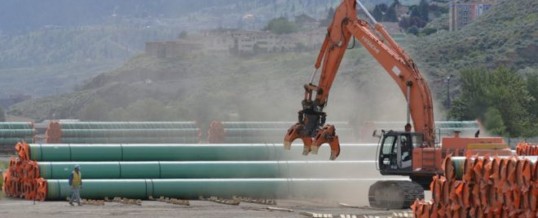
Despite trying to find a balance between economic and environmental interests, the Trudeau government’s balancing efforts during its first term – particularly its decision to purchase the Trans Mountain Pipeline and put a price on carbon – only aggravated both sides. Environmentalists believed that the pipeline concession was a death blow to a viable climate plan, while proponents of the oil and gas sector argued that the “carbon tax” would increase the cost of everything and fail to reduce emissions.

Canada thus faces an extremely difficult challenge ahead in reconciling these competing interests. It wants to do well by the world in terms of contributing to climate change mitigation. And yet it also wants to accrue some economic benefit from being in the fortunate position of sitting atop the world’s third-largest oil reserves (169 billion barrels, 10% of the world’s oil).

The Canadian government also wants to achieve reconciliation with First Nations communities. While some of these communities see commercial opportunities in oil and gas development, others vehemently oppose the sector. Moreover, it wants to unify a country which is deeply divided along provincial lines, with Québec and B.C. effectively blocking Alberta oil from reaching the East and West coasts, respectively.

So, what is to be done? I do not claim to have all the answers. But if the Trudeau government sticks with the same approach as before, it is destined to fail.

The previous approach was kneecapped by its unnuanced interpretation of the relationship between the economy and the environment. The Trudeau government’s mantra became “the environment and the economy go hand in hand!”. This adage was rammed down Canadians’ throats at every turn.

The problem is that this is not always true. What’s good for the economy is not always good for the environment, and vice versa. While it is possible to lessen the environmental footprint of growth (in fact, for every dollar of GDP growth today, Canada only emits 65% as much CO2 as it did in 1990), there are nevertheless limits to this trend. In some spaces this type of win-win relationship between economy and environment is simply unattainable.

Attempts to reconcile climate action and growth is a lost cause in the oil and gas sector in particular. Even if it were possible to achieve carbon-neutral production (a nearly impossible target in the case of Alberta bitumen), there is the additional challenge of decarbonizing the transport of oil and gas to market.

Pipelines currently emit the equivalent of 7.1 million tons of CO2 in Canada, more than all emissions from domestic aviation. We would also have to neutralize leaks, known as fugitive emissions, which amount to astonishing 54 million tons of CO2, or 7.5% of Canada’s total emissions. In addition, we would then need to decarbonize oil and gas consumption within the end-use sectors such as transport and heating, which account for 28% and 11% of Canada’s emissions, respectively. Oil and gas extraction alone accounts for nearly 15% of Canada’s total, and these emissions are expected to increase in the coming years. In short, any form of support for oil and gas – be it regulatory approval of a pipeline, or a fossil fuel subsidy – poses a direct challenge to climate action.

By the same token, most aggressive climate mitigation policies – such as putting a price on carbon or investing in renewable energy – pose a threat to the viability of the oil and gas sector. In this particular instance, what’s good for the economy is not good for the environment.

However, that is not to say that there’s no possible win-win scenario, even in the Prairies. In fact, numerous opportunities await, with four obvious areas of opportunity: a) renewable energy; b) regenerative agriculture; c) oil well reclamation; and d) alternative fuels.

The renewable energy opportunities in Alberta and Saskatchewan are exceptional. The potential for wind power, solar energy, and geothermal are orders of magnitude greater than presently installed capacity of those energy technologies. They could be expanded with the aim of generating tens of thousands of green jobs and billions of dollars in economic activity over the next decade.

The Prairie provinces are also agricultural powerhouses. While agriculture presently emits about 8.4% of Canada’s greenhouse gases, the switch to regenerative practices like no-till crop production or grassland conservation grazing have potential to sequester enormous amounts of CO2. That would offset some of those emissions, all while producing high-value food commodities and generating other ecosystem benefits, relating to biodiversity, soil quality and watershed management.

After decades of oil and gas development, Western Canada has a significant problem on its hands, with 139,000 inactive or abandoned oil wells requiring clean-up. Alberta’s share of the clean-up will cost $260 billion. As Regan Boychuk and Avi Lewis recently pointed out, this could be interpreted as a $260 billion opportunity. One of the obvious benefits is that the same jobs which were created by the drilling industry could be sustained by substantial investments in the reclamation industry. Since reclamation involves restoring topsoil and re-establishing vegetation, these projects would also support additional carbon sequestration.

Finally, alternative fuels offer tremendous promise in the Western provinces as well, particularly since they are linked to existing sectors such as agriculture, forestry and fossil fuels. There are a number of different kinds of low-carbon alternative fuels.

Biofuels are in theory carbon-neutral because they are made using crop by-products or other materials, such as forestry residues and waste from the agri-food sector. They thus return CO2 to the atmosphere in a cyclical manner when burned – as opposed to burning fossil fuels, which just pumps additional CO2 in the atmosphere.

Hydrogen is another proposed alternative fuel for the transport sector. There is presently a carbon-neutral trucking pilot project in Alberta underway. It is fuelled entirely by hydrogen, which only emits water when burned.

The most common source of hydrogen is fossil fuel (of which there is no shortage in Western Canada!). One recent scientific effort has found a way to extract hydrogen from oil deposits underground, leaving the carbon dioxide underground as well. This is also useful for a third kind of alternative fuel known as electrofuels. They combine hydrogen with carbon dioxide sucked out of the air to produce synthetic hydrocarbons that mimic fossil fuels, but are carbon-neutral.

In many ways, these four opportunities are already being explored. The renewable energy sector is red hot in the Prairies. The expansion of no-till agriculture across the Prairie provinces, which started decades ago, has increased yields, reduced fertilizer and fuel costs and continues to support the drawdown of CO2. This year, there were more decommissioned wells than drilled wells in Alberta. One report on bioenergy found that between 2007 and 2014, bioenergy projects in Alberta produced a savings equivalent to 11 million tons of CO2 and gave rise to a $2 billion dollar industry supporting thousands of jobs.

But there’s a catch. These climate mitigation and economic development opportunities will only be truly maximized if they receive the requisite levels of support from the rest of Canada.

The federal government in particular has an essential role to play. Instead of extending olive branches in the form of pipelines, the feds should get out of the oil business and focus their efforts on achieving a genuine, just transition led by the innovative people of the Prairies. Instead of merely paying lip service to incentives for clean energy through tax breaks, Canada ought to fork over major investment dollars – in research, development and, in particular, support for new infrastructures required for this transition. Instead of centring its economic development strategy on getting Alberta oil to tidewater, the Trudeau government ought to recognize the vulnerabilities lurking behind high-cost synthetic bitumen in a very volatile world market. Finally, the government should support indigenous leadership in climate change mitigation, particularly by fully implementing the 94 calls to action laid out by the Truth and Reconciliation Commission.

The post-2014 downturn in Alberta has exacerbated sentiments of Western alienation. The resurgence of secure, well-paying jobs in the region could help reduce these tensions. The Trudeau government must recognize the opportunity before it. It needs to tackle economic development, national unity and climate change all at once. There’s not enough time left to keep making the same mistakes as before.

Thursday, June 6, 2019

How to deal with news stories claiming the end of civilization is nigh...

I've had yet another conversation with a student feeling worried, anxious and confused about yet another report pointing out the dire threat of climate change. This headline (or variants of it) has been making the rounds today: "Climate change could end human civilization by 2050: report https://trib.al/bZ5o70d". 

What are we to make of this information, and such extraordinary headlines - which suggest that we could literally be dead in 30 years!? Here's my attempt an an answer for students:

1) Before reading the rest of this... if you are feeling anxious just take a moment to look around your current context and breathe, and take a moment to appreciate what a wonderful world this is and what a wonderful life you have. If you're reading this then the walls are NOT coming down around you at the present moment. You're not facing an imminent threat (as in, your life is not in danger at this moment). You have access to all your needs for survival (food, shelter, water, companionship, etc.), and likely many amenities too. Quite frankly, by virtue of just being able to read this it is likely the case that your life is - relatively speaking - pretty darn fantastic. So just take a moment to appreciate that before trying to process this type of news...

2)  The situation is indeed urgent, but the future is not already determined. Try not to get your focus diverted by sensationalist headlines... the actual report itself isn't actually saying much new when you boil it down: It's saying IF we don't tackle climate change the consequences will be extremely dire. But we actually have already known that for a while, right? The important thing to note is that this is not inevitable. We CAN avoid that fate, but we have to change our BEHAVIOUR. One way to think of reports like these is that they are like 'interventions' for a friend who's an addict. It's not that they WILL die from their addiction, but rather that if the situation doesn't change things could get very, very bad. So... change!

3) Sometimes it feels like changing our personal behaviour is the only thing we can do, and there are lots of good reasons to change our personal behaviour and consumption. But ultimately the most effective changes are at the COLLECTIVE SCALE. In other words, instead of JUST cutting down on, say, single-use plastics, join a campaign or sign a petition or write a political letter about it. Ultimately we need the COLLECTIVE to change behaviour, not just individuals, and the best way to bring those changes about are through political change or regulation or laws or policies or programs, etc., that target entire communities of people. And if you feel the governments of the day aren't addressing the situation adequately, join a political movement to express your concern along with others.

4) Try not to DWELL on the shitty stories. Instead try to focus on good news stories. There are amazing things happening - even in terms of climate mitigation. For instance, another story came our today which was eclipsed by that report: Finland - a developed Northern country - has announced a plan to be carbon-neutral by 2035. That's remarkable, and it serves an example we can point to. The Clean Energy Canada weekly newsletter is full of stories like this. Subscribe so it ends up in your inbox each week.

5) Channel your concern into action of some sort. This is kind of a repeat of point 3 above.. but it's so important. It will also help you feel better and give meaning. ACT, with others, in a POSITIVE way. There's a bazillion things you can do. From attending/organizing a rally to planning trees to writing a song, or calling your MP to express your frustration, whatever... just try to CHANNEL your concern into action (and again, not JUST more sustainable consumption).

6) Don't let yourself slip into despair. In fact, remind yourself that as one of the world's privileged individuals you have a RESPONSIBILITY to NOT become a climate defeatist. And for those times when you're having trouble, talk. Talk to your friends, your family, your colleagues, your professors, your psychologist, whoever! Just don't sink into a world of despair, and especially not on your own. Talk it out... and seek professional help if you're having trouble with this (there's nothing wrong with getting medical support for this).