The following is from a two-part guest blog I wrote for the McLeod Group. See the original here.
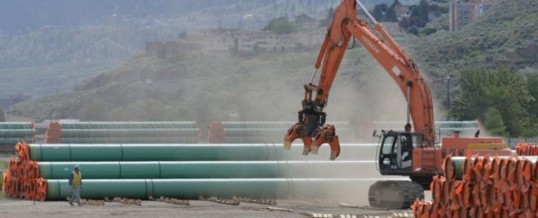
The 2019 federal election revealed an underlying contradiction between Canada’s climate change mitigation policy and its energy development strategy. On one hand, voters rewarded the Trudeau government’s efforts to take bold action on climate change. On the other hand, the Prairie provinces demonstrated deep discontent with what they saw as a federal government bent on stifling the energy sector.
Despite trying to find a balance between economic and environmental interests, the Trudeau government’s balancing efforts during its first term – particularly its decision to purchase the Trans Mountain Pipeline and put a price on carbon – only aggravated both sides. Environmentalists believed that the pipeline concession was a death blow to a viable climate plan, while proponents of the oil and gas sector argued that the “carbon tax” would increase the cost of everything and fail to reduce emissions.
Canada thus faces an extremely difficult challenge ahead in reconciling these competing interests. It wants to do well by the world in terms of contributing to climate change mitigation. And yet it also wants to accrue some economic benefit from being in the fortunate position of sitting atop the world’s third-largest oil reserves (169 billion barrels, 10% of the world’s oil).
The Canadian government also wants to achieve reconciliation with First Nations communities. While some of these communities see commercial opportunities in oil and gas development, others vehemently oppose the sector. Moreover, it wants to unify a country which is deeply divided along provincial lines, with Québec and B.C. effectively blocking Alberta oil from reaching the East and West coasts, respectively.
So, what is to be done? I do not claim to have all the answers. But if the Trudeau government sticks with the same approach as before, it is destined to fail.
The previous approach was kneecapped by its unnuanced interpretation of the relationship between the economy and the environment. The Trudeau government’s mantra became “the environment and the economy go hand in hand!”. This adage was rammed down Canadians’ throats at every turn.
The problem is that this is not always true. What’s good for the economy is not always good for the environment, and vice versa. While it is possible to lessen the environmental footprint of growth (in fact, for every dollar of GDP growth today, Canada only emits 65% as much CO2 as it did in 1990), there are nevertheless limits to this trend. In some spaces this type of win-win relationship between economy and environment is simply unattainable.
Attempts to reconcile climate action and growth is a lost cause in the oil and gas sector in particular. Even if it were possible to achieve carbon-neutral production (a nearly impossible target in the case of Alberta bitumen), there is the additional challenge of decarbonizing the transport of oil and gas to market.
Pipelines currently emit the equivalent of 7.1 million tons of CO2 in Canada, more than all emissions from domestic aviation. We would also have to neutralize leaks, known as fugitive emissions, which amount to astonishing 54 million tons of CO2, or 7.5% of Canada’s total emissions. In addition, we would then need to decarbonize oil and gas consumption within the end-use sectors such as transport and heating, which account for 28% and 11% of Canada’s emissions, respectively. Oil and gas extraction alone accounts for nearly 15% of Canada’s total, and these emissions are expected to increase in the coming years. In short, any form of support for oil and gas – be it regulatory approval of a pipeline, or a fossil fuel subsidy – poses a direct challenge to climate action.
By the same token, most aggressive climate mitigation policies – such as putting a price on carbon or investing in renewable energy – pose a threat to the viability of the oil and gas sector. In this particular instance, what’s good for the economy is not good for the environment.
However, that is not to say that there’s no possible win-win scenario, even in the Prairies. In fact, numerous opportunities await, with four obvious areas of opportunity: a) renewable energy; b) regenerative agriculture; c) oil well reclamation; and d) alternative fuels.
The renewable energy opportunities in Alberta and Saskatchewan are exceptional. The potential for wind power, solar energy, and geothermal are orders of magnitude greater than presently installed capacity of those energy technologies. They could be expanded with the aim of generating tens of thousands of green jobs and billions of dollars in economic activity over the next decade.
The Prairie provinces are also agricultural powerhouses. While agriculture presently emits about 8.4% of Canada’s greenhouse gases, the switch to regenerative practices like no-till crop production or grassland conservation grazing have potential to sequester enormous amounts of CO2. That would offset some of those emissions, all while producing high-value food commodities and generating other ecosystem benefits, relating to biodiversity, soil quality and watershed management.
After decades of oil and gas development, Western Canada has a significant problem on its hands, with 139,000 inactive or abandoned oil wells requiring clean-up. Alberta’s share of the clean-up will cost $260 billion. As Regan Boychuk and Avi Lewis recently pointed out, this could be interpreted as a $260 billion opportunity. One of the obvious benefits is that the same jobs which were created by the drilling industry could be sustained by substantial investments in the reclamation industry. Since reclamation involves restoring topsoil and re-establishing vegetation, these projects would also support additional carbon sequestration.
Finally, alternative fuels offer tremendous promise in the Western provinces as well, particularly since they are linked to existing sectors such as agriculture, forestry and fossil fuels. There are a number of different kinds of low-carbon alternative fuels.
Biofuels are in theory carbon-neutral because they are made using crop by-products or other materials, such as forestry residues and waste from the agri-food sector. They thus return CO2 to the atmosphere in a cyclical manner when burned – as opposed to burning fossil fuels, which just pumps additional CO2 in the atmosphere.
Hydrogen is another proposed alternative fuel for the transport sector. There is presently a carbon-neutral trucking pilot project in Alberta underway. It is fuelled entirely by hydrogen, which only emits water when burned.
The most common source of hydrogen is fossil fuel (of which there is no shortage in Western Canada!). One recent scientific effort has found a way to extract hydrogen from oil deposits underground, leaving the carbon dioxide underground as well. This is also useful for a third kind of alternative fuel known as electrofuels. They combine hydrogen with carbon dioxide sucked out of the air to produce synthetic hydrocarbons that mimic fossil fuels, but are carbon-neutral.
In many ways, these four opportunities are already being explored. The renewable energy sector is red hot in the Prairies. The expansion of no-till agriculture across the Prairie provinces, which started decades ago, has increased yields, reduced fertilizer and fuel costs and continues to support the drawdown of CO2. This year, there were more decommissioned wells than drilled wells in Alberta. One report on bioenergy found that between 2007 and 2014, bioenergy projects in Alberta produced a savings equivalent to 11 million tons of CO2 and gave rise to a $2 billion dollar industry supporting thousands of jobs.
But there’s a catch. These climate mitigation and economic development opportunities will only be truly maximized if they receive the requisite levels of support from the rest of Canada.
The federal government in particular has an essential role to play. Instead of extending olive branches in the form of pipelines, the feds should get out of the oil business and focus their efforts on achieving a genuine, just transition led by the innovative people of the Prairies. Instead of merely paying lip service to incentives for clean energy through tax breaks, Canada ought to fork over major investment dollars – in research, development and, in particular, support for new infrastructures required for this transition. Instead of centring its economic development strategy on getting Alberta oil to tidewater, the Trudeau government ought to recognize the vulnerabilities lurking behind high-cost synthetic bitumen in a very volatile world market. Finally, the government should support indigenous leadership in climate change mitigation, particularly by fully implementing the 94 calls to action laid out by the Truth and Reconciliation Commission.
The post-2014 downturn in Alberta has exacerbated sentiments of Western alienation. The resurgence of secure, well-paying jobs in the region could help reduce these tensions. The Trudeau government must recognize the opportunity before it. It needs to tackle economic development, national unity and climate change all at once. There’s not enough time left to keep making the same mistakes as before.
Showing posts with label Renewables. Show all posts
Friday, December 6, 2019
Canada’s oil and gas sector and climate mitigation – Part 1: The problem
Discussion Topics...
Alberta,
Canada,
Climate Change,
Oil Sands,
Renewables,
Western Alienation
Wednesday, November 15, 2017
The Nuclear Renaissance is Dead… Did Canada Miss the Memo?
Here's my latest post for the Centre for International Policy Studies Blog, available here.
The problem is that hard facts show no evidence of a revival… at all! In fact, nuclear energy’s heyday was way back in the mid-1980s, when the world saw net gains of between 20 and 30 reactors each year. In comparison, in the last five years there has only been an average net gain of 4.5 reactors per year. In terms of global electricity production, nuclear energy peaked in 2006, at 2,660 TWh — today nuclear is producing 7% less electricity! The story for nuclear’s share of global electricity production is even worse. That figure peaked in 1996 at 17.5%; today nuclear only provides 10.5% of the world’s electricity — a decline of 40%! Clearly, there is no renaissance. If anything, the long-term trends show early signs of decline.
These are some of the key messages of the World Nuclear Industry Status Report 2017 (WNISR) — launched in Canada last week at the University of Ottawa, in an event co-sponsored by the Centre for International Policy Studiesand Smart Prosperity Institute. The event featured keynote speaker Mycle Schneider, Lead Convening Author and Publisher of the WNISR, with two discussants who contextualized these trends for Canada’s energy and climate policies — Ralph Torrie of Torrie Smith Associates, and Catherine Abreu of Climate Action Network Canada.
Schneider spoke of how nuclear energy is exceptionally expensive (relative, in particular, to renewables), how nuclear projects are prone to cost overruns and eventual abandonment, and how most “nuclear nations” have long ago seen the peak of nuclear production (including Canada, which today does not produce as much as it did in 1994). Further, the argument that nuclear energy is a necessary component of climate mitigation was thoroughly debunked by all three speakers, in part because reactor construction projects are so notoriously slow (it takes, on average, ten years for a reactor to be built) and expensive, that a much cheaper, quicker solution with free fuel is readily available in renewables.You would be forgiven for wondering whether this is all just a manifestation of the “Fukushima effect” — a sudden but temporary downturn since the 2011 meltdown in Japan. But you would be wrong. Although the industry’s lead lobby organization, the World Nuclear Association, paints an image of growth, particularly since 2011, nuclear’s slide in global output began over a decade ago. Just look at the financial situation of a number of global nuclear giants — including Japan-based TEPCO (operator of Fukushima-Daiichi) and Toshiba, German-based RWE and E.ON, and French-based EDR and AREVA. Many of these companies are facing crippling debts or bankruptcies, but most importantly their share prices started to plummet back in 2007/08 — yearsbefore the Fukushima disaster. While global investment in nuclear energy has ranged between $10 and $50 billion US (per year) over the last five years, investment in renewables has ranged between $240–$310 billion US (per year) over the same period.
You would also be forgiven for wondering whether nuclear’s fortunes were about to rebound once all this talk of “Small Modular Reactors” (or SMRs) — supposedly safer and cheaper fission reactors — becomes a reality. But you’d be wrong again. Despite billions spent on developing SMRs, the industry has not yet had one functional SMR come online. More importantly, investors are starting to jump ship after realizing that there is just no market for such expensive electricity when much cheaper alternatives are available. The talk of SMRs is reminiscent of the old fusion joke in nuclear circles — it’s always been just ten years away! As WNISR 2017 concludes, “there is no sign at this point that SMRs could play any major role in tomorrow’s electricity generating business.”
Finally, you would also have been forgiven for thinking that nuclear development — however expensive or slow — is nevertheless needed as a counterpoint to renewables for those times when the sun doesn’t shine and the wind doesn’t blow. This argument has been made by many pro-nuclear environmentalists, who lament how the shuttering of nuclear power plants leads to more gas-fired plants. But yet again, the speakers at the WNISR launch were unanimous in suggesting that this idea too is wrongheaded. Unlike the 20th century, where the model was based on a few large utilities cranking out tons of baseload power at all hours of the day to satiate wanton consumption — for the 21st century, we are working on smart grids, smart generation, and energy efficiency. Tomorrow’s model is thus diffuse and decentralized, with countless nodes of generation and storage located all throughout the network, and it is “responsive” — in generating (or releasing, from batteries) electricity when and where it is needed. The irony in the pro-nuclear argument is that technological innovation is touted as the best way to make nuclear safer, cheaper, and quicker to build, yet brushed aside for the problems of energy storage and grid transformation.
The WNISR launch was certainly enlightening, but it sure left many audience members confused about another report launched the same week — the Government of Ontario’s Long-Term Energy Plan (LTEP). Despite its decades-old nuclear power plants, Ontario is spending billions of dollars refurbishing them over the next two decades. According to one independent assessment, these expenditures on nuclear have caused Ontario’s electricity prices to skyrocket. Meanwhile, another report from 2016 discusses the significant economic benefits to be gained from decommissioning Ontario’s nuclear power plants today. As Canada’s main driver of nuclear development, Ontario seems to be headed in the wrong direction. If Ontario truly wants an affordable, low-carbon, flexible electricity grid, it may be time to jump off the nuclear renaissance bandwagon.
Since the early 2000s, there has been much talk about the “nuclear renaissance” — the expected revival and expansion of the civilian nuclear energy industry. The idea has largely been kept afloat by industry efforts to promote nuclear energy as a necessary part of global climate change mitigation efforts, as well as the ambitious plans made by certain countries to greatly expand nuclear power (China, notably).
These are some of the key messages of the World Nuclear Industry Status Report 2017 (WNISR) — launched in Canada last week at the University of Ottawa, in an event co-sponsored by the Centre for International Policy Studiesand Smart Prosperity Institute. The event featured keynote speaker Mycle Schneider, Lead Convening Author and Publisher of the WNISR, with two discussants who contextualized these trends for Canada’s energy and climate policies — Ralph Torrie of Torrie Smith Associates, and Catherine Abreu of Climate Action Network Canada.
Schneider spoke of how nuclear energy is exceptionally expensive (relative, in particular, to renewables), how nuclear projects are prone to cost overruns and eventual abandonment, and how most “nuclear nations” have long ago seen the peak of nuclear production (including Canada, which today does not produce as much as it did in 1994). Further, the argument that nuclear energy is a necessary component of climate mitigation was thoroughly debunked by all three speakers, in part because reactor construction projects are so notoriously slow (it takes, on average, ten years for a reactor to be built) and expensive, that a much cheaper, quicker solution with free fuel is readily available in renewables.You would be forgiven for wondering whether this is all just a manifestation of the “Fukushima effect” — a sudden but temporary downturn since the 2011 meltdown in Japan. But you would be wrong. Although the industry’s lead lobby organization, the World Nuclear Association, paints an image of growth, particularly since 2011, nuclear’s slide in global output began over a decade ago. Just look at the financial situation of a number of global nuclear giants — including Japan-based TEPCO (operator of Fukushima-Daiichi) and Toshiba, German-based RWE and E.ON, and French-based EDR and AREVA. Many of these companies are facing crippling debts or bankruptcies, but most importantly their share prices started to plummet back in 2007/08 — yearsbefore the Fukushima disaster. While global investment in nuclear energy has ranged between $10 and $50 billion US (per year) over the last five years, investment in renewables has ranged between $240–$310 billion US (per year) over the same period.
You would also be forgiven for wondering whether nuclear’s fortunes were about to rebound once all this talk of “Small Modular Reactors” (or SMRs) — supposedly safer and cheaper fission reactors — becomes a reality. But you’d be wrong again. Despite billions spent on developing SMRs, the industry has not yet had one functional SMR come online. More importantly, investors are starting to jump ship after realizing that there is just no market for such expensive electricity when much cheaper alternatives are available. The talk of SMRs is reminiscent of the old fusion joke in nuclear circles — it’s always been just ten years away! As WNISR 2017 concludes, “there is no sign at this point that SMRs could play any major role in tomorrow’s electricity generating business.”
Finally, you would also have been forgiven for thinking that nuclear development — however expensive or slow — is nevertheless needed as a counterpoint to renewables for those times when the sun doesn’t shine and the wind doesn’t blow. This argument has been made by many pro-nuclear environmentalists, who lament how the shuttering of nuclear power plants leads to more gas-fired plants. But yet again, the speakers at the WNISR launch were unanimous in suggesting that this idea too is wrongheaded. Unlike the 20th century, where the model was based on a few large utilities cranking out tons of baseload power at all hours of the day to satiate wanton consumption — for the 21st century, we are working on smart grids, smart generation, and energy efficiency. Tomorrow’s model is thus diffuse and decentralized, with countless nodes of generation and storage located all throughout the network, and it is “responsive” — in generating (or releasing, from batteries) electricity when and where it is needed. The irony in the pro-nuclear argument is that technological innovation is touted as the best way to make nuclear safer, cheaper, and quicker to build, yet brushed aside for the problems of energy storage and grid transformation.
The WNISR launch was certainly enlightening, but it sure left many audience members confused about another report launched the same week — the Government of Ontario’s Long-Term Energy Plan (LTEP). Despite its decades-old nuclear power plants, Ontario is spending billions of dollars refurbishing them over the next two decades. According to one independent assessment, these expenditures on nuclear have caused Ontario’s electricity prices to skyrocket. Meanwhile, another report from 2016 discusses the significant economic benefits to be gained from decommissioning Ontario’s nuclear power plants today. As Canada’s main driver of nuclear development, Ontario seems to be headed in the wrong direction. If Ontario truly wants an affordable, low-carbon, flexible electricity grid, it may be time to jump off the nuclear renaissance bandwagon.
Discussion Topics...
Climate Change,
Energy,
Nuclear Energy,
Renewables
Subscribe to:
Posts (Atom)

